Material: Le Silence de la mer (The Silence of the Sea)
Melville, J.-P. (1949) Le Silence de la mer [Film]. France: Melville Productions.
*A story set in German-occupied France during World War II, centred on the claustrophobic relationship between a Frenchman, his niece, and a German lieutenant (Werner von Ebrennac) billeted in their house. The story is told from the perspective of the Frenchman, whose diary reflects Ebrennac’s personal epiphany as he comes to understand the human cost of war.
As a wartime film, Le Silence de la mer fundamentally explores the idea of resistance beyond violence. The title itself is a metaphor for France’s passive resistance against foreign occupation, with silence as a weapon of defiance, and the sea representing the undercurrents of emotions and culture that persist despite oppression.
Method One: Hybridising
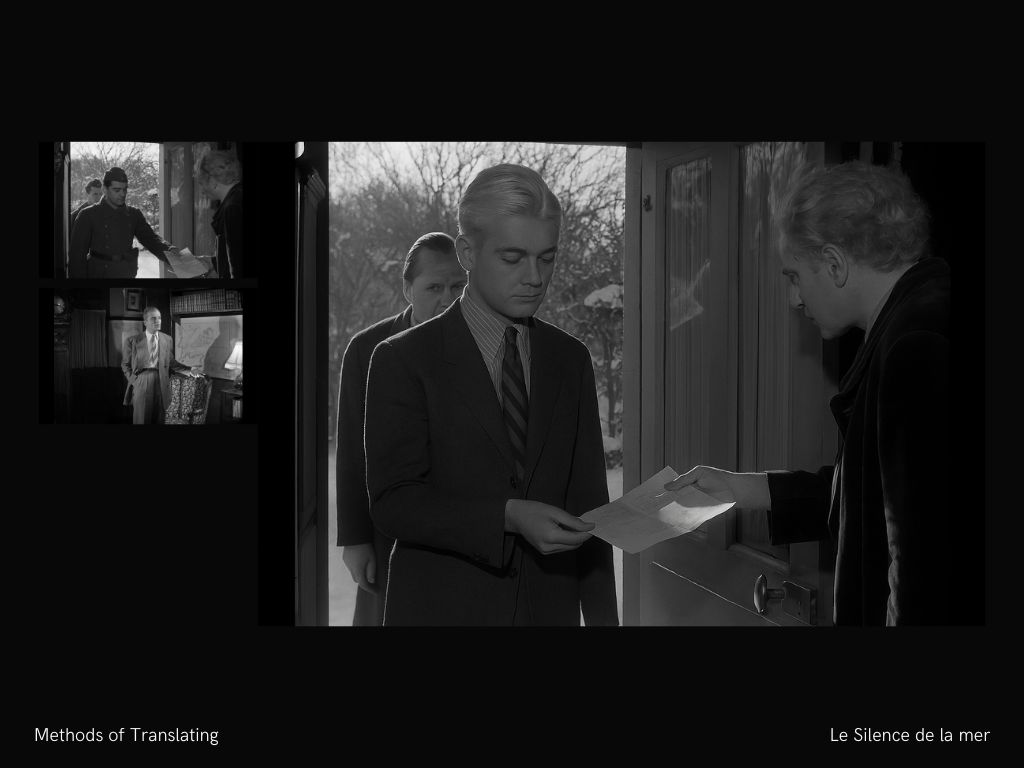
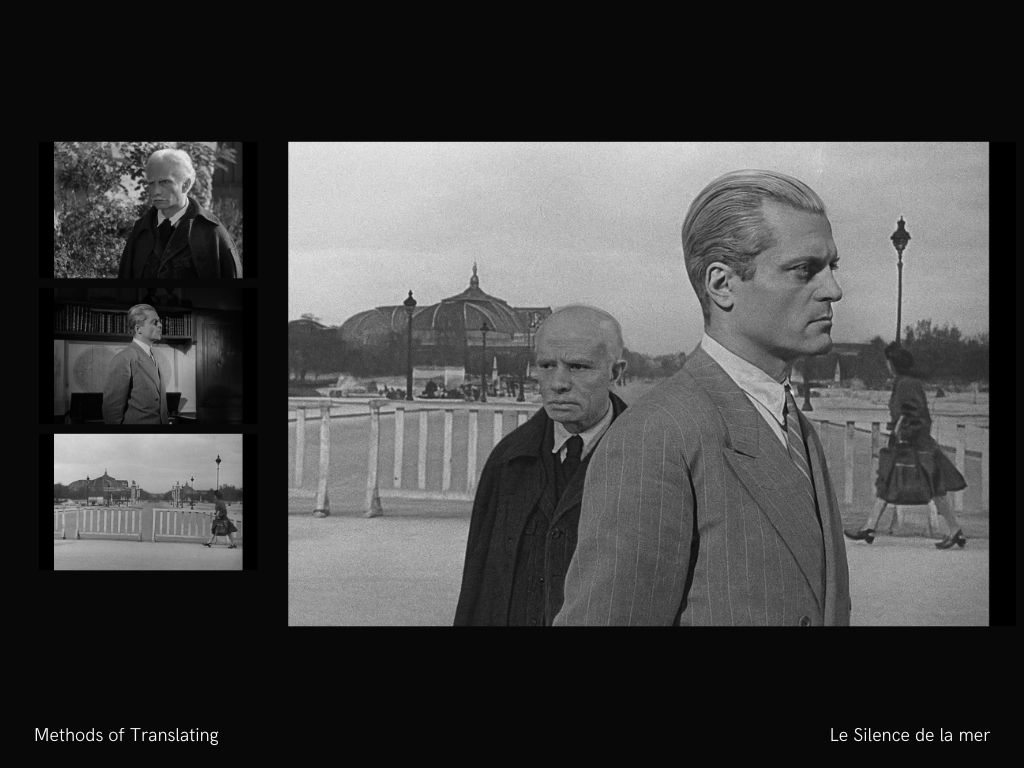
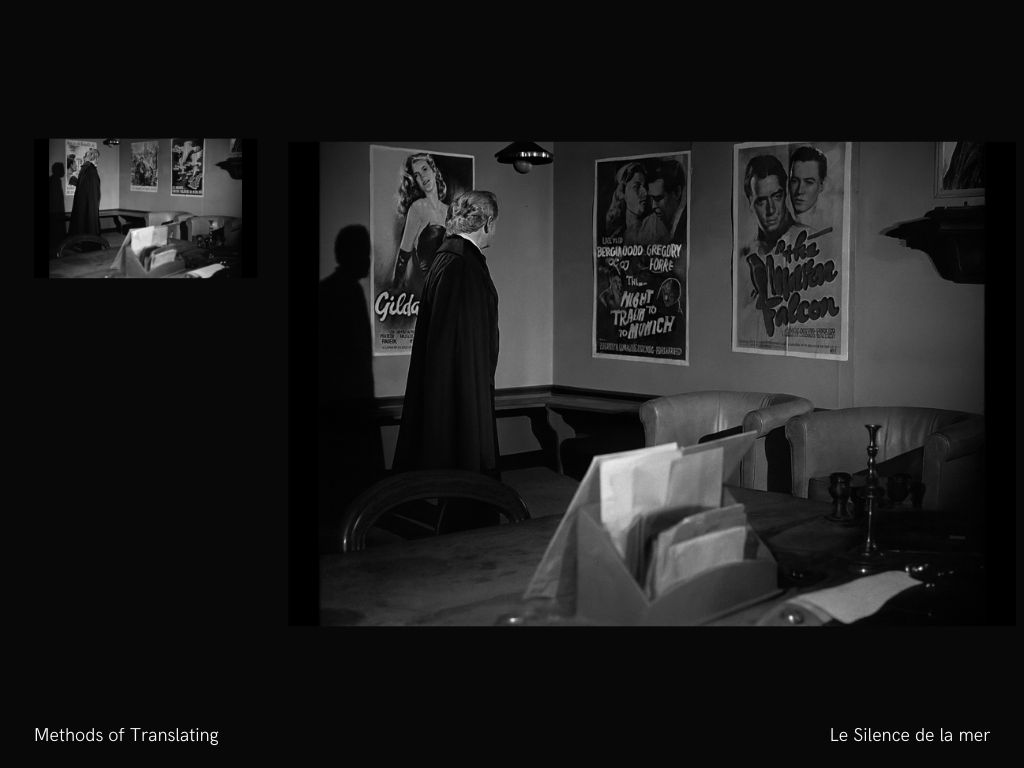
This method combines and reconfigures separate scenes from the film to create entirely new narratives by altering the context and roles of the three main characters.
Collected scenes ↓
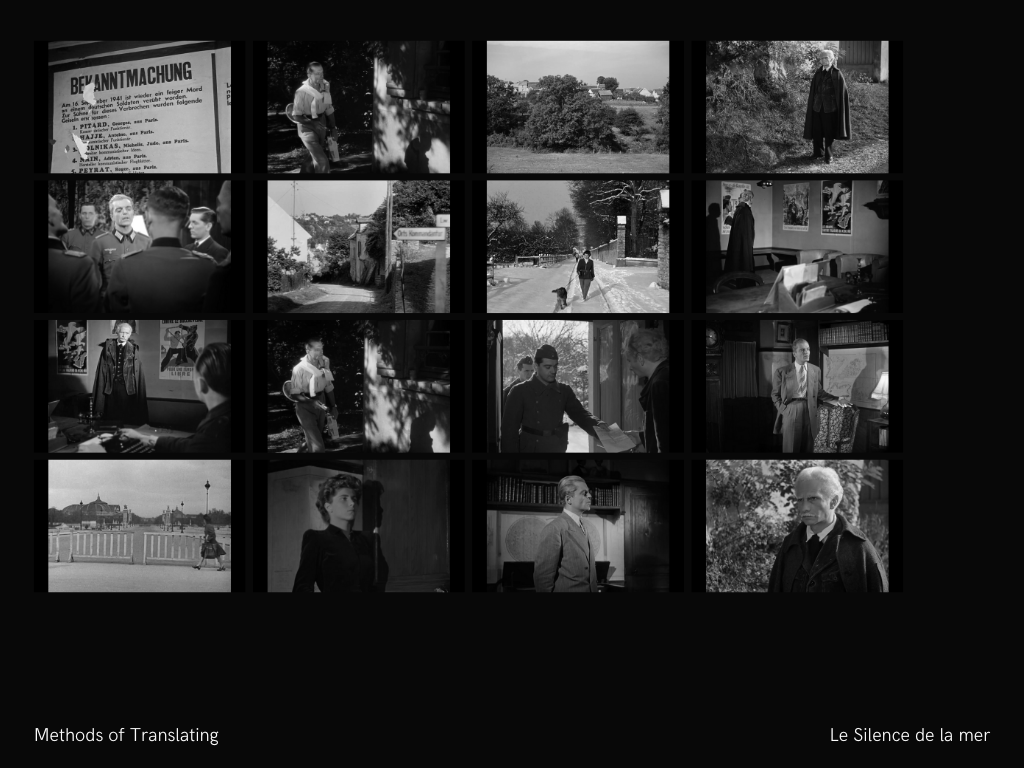
This approach employs varying approaches to generate the alternative story lines.
1. Switching Roles
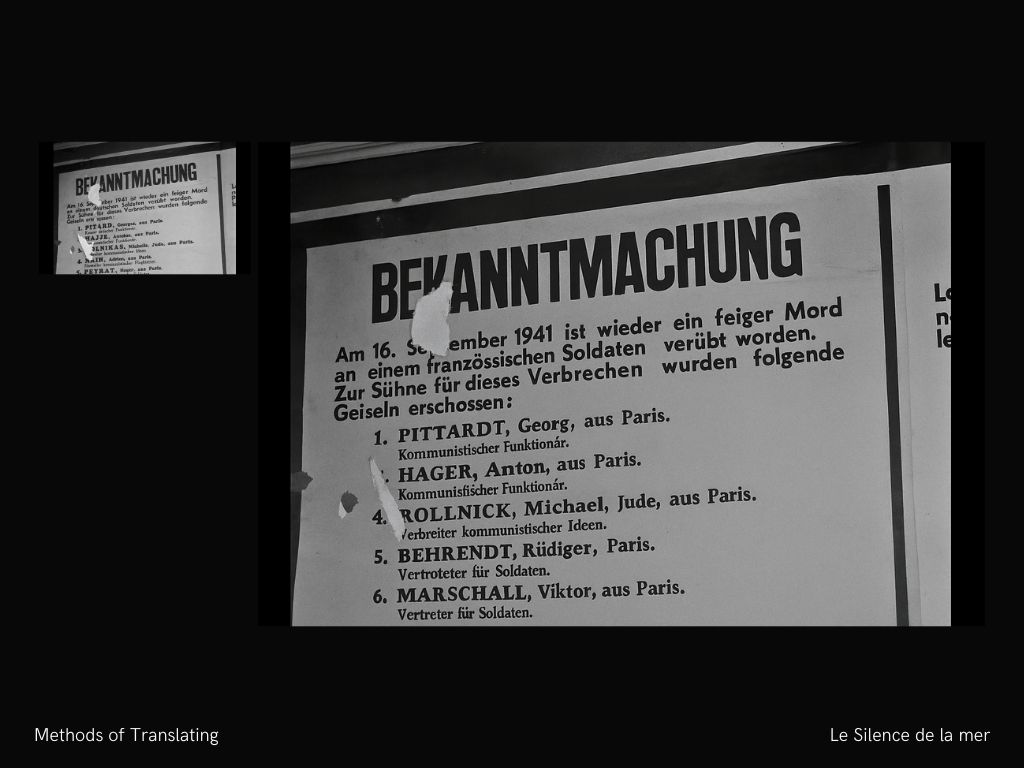
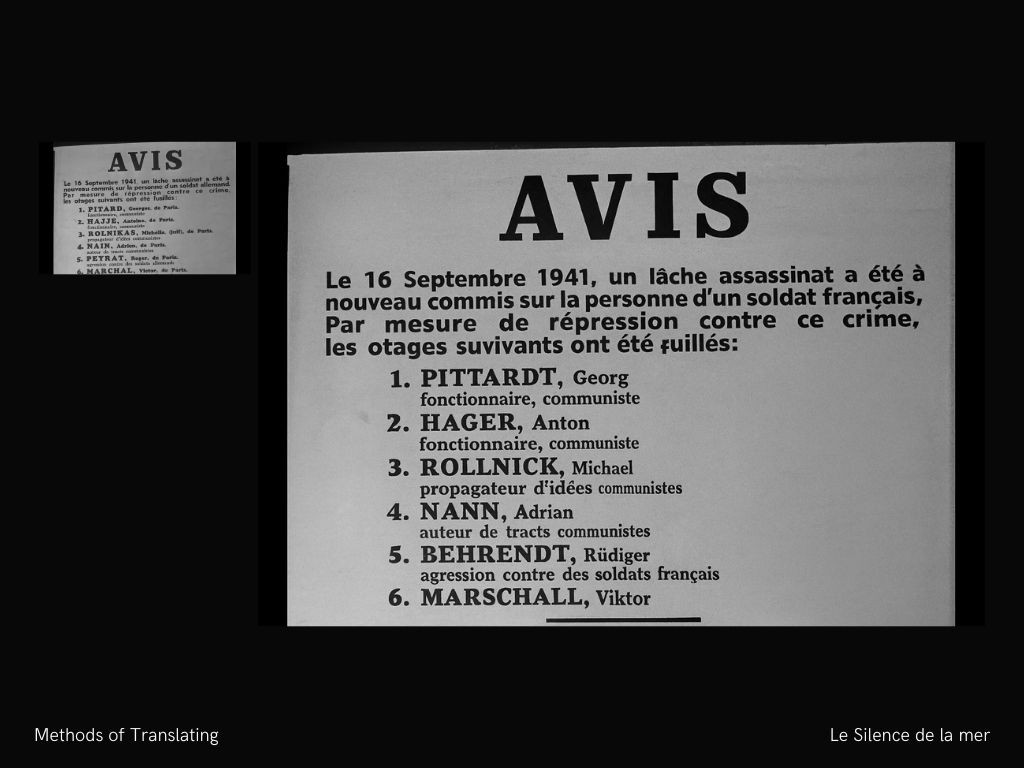
In the first two images, the roles of the intruder and the intruded are reversed by modifying the execution notice—from “executing French civilians in light of the murder of a German soldier” to “executing German civilians in light of the murder of a French soldier.” Names of executed French individuals are replaced with a German equivalent.
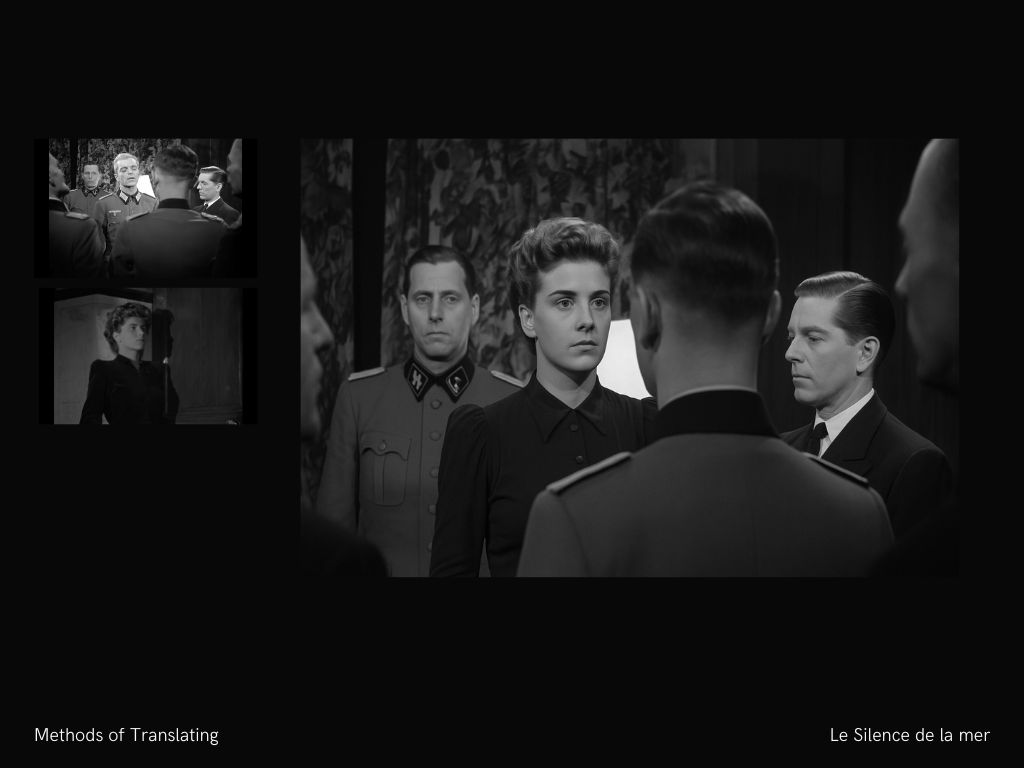
The third image transforms the Niece from a character who avoids confrontation with the German military and remains silent throughout the story into one who boldly confronts her enemy. Collectively, the images heighten the tension between opposing forces in war, blurring the boundaries between the personal and the political, and the victim and the perpetrator.
2. Changing Context
This approach diminishes the gravity of war by changing notable wartime scenes into ordinary, everyday settings. In the first image, the German soldiers, originally delivering a forced notice that the Frenchman’s home would be requisitioned for military use, are replaced with Ebrennac acting as a real estate agent. Similarly, the second image portrays Ebrennac as a French local, casually strolling through the city centre of Paris. The third image, which originally took place in a Nazi military office, replaces propaganda posters praising the Axis forces with movie posters. Collectively, these images strip away scenes of wartime severity, highlighting how the horrors of political turmoil can be obscured when reframed through banal imagery.
Method Two: Juxtaposing
This method extracts, overlaps, and intertwines a monologue with another dialogue (both from the film) to generate new interpretations of the original monologue.
Original monologue ↓
Before travelling to Paris to attend a convention, which he believed was being held in preparation for the union of France and Germany, Ebrennac expresses his excitement about the cultural and spiritual “marriage” between the two nations. He sees this union as mutually beneficial: France would reclaim its freedom, while Germany would gain and absorb France’s rich history and culture. The French hosts, however, remain silent and mournful.
Original dialogue ↓
During his visit to Paris, Ebrennac’s comrades mocked at his ideals of German’s occupation as a mission of cultural understanding and reciprocal union. They made it clear that their objective is not to protect or enlighten France, but to crush its spirit and assert dominance. They ridicule his attempts at empathy and accuse him of being naive, emphasising that their role is to subjugate, intimidate, and break the morale of the French people.
Monologue+Dialogue ↓
By intertwining the two audio tracks, this method reconfigures Ebrennac’s originally well-intentioned monologue into a threatening notice, likely exposing how his message was interpreted by the French hosts.
Method Three: Paraphrasing
This method transforms and recomposes spoken words and environmental sounds into symbolic musical motifs. Throughout the film, music serves as a key tool for communication, helping to build emotional connections between the three main characters. Ebrennac introduces himself as a musician, having been fascinated by French music from a young age. The Frenchman also describes Ebrennac as a “cultured man,” which contrasts with their usual perception of an enemy. The niece, likewise, is a piano teacher. It was through music that both parties were able to set aside their political roles, allowing the French family to recognise Ebrennac as an ordinary individual caught in the circumstances of war beyond his own control, just like themselves.
Using Ebrennac’s monologue as the source, I separated his speech from the background noise and music. I then imported these audio tracks individually into music software, which analysed and encoded the sounds as data with notes and rhythms according to my preferences, and exported them as MIDI files. These MIDI files were subsequently recomposed into digital music scores. Below is a new track of music generated based on the scores.
*Strings: Originally background noises and musics / Piano: Originally Ebrennac
Result ↓
At first glance, the resulting scores appear conventional and could be read and performed like standard musical notation. However, they are not conventionally musical. Instead of representing a melody, the notes and symbols capture the flow, accents, and emotional tone of Ebrennac’s words (piano), as well as the silence shared between the French hosts (strings).
Feedback
- Method Three demonstrates interesting process and produces compelling visuals, but how these gestures and visual outcomes respond to the brief is less clear.
- Method one produces interesting narratives, especially the one changing posters. The subtle modifications to the original scenes enable new interpretations of the film and characters.
- Possible further development:
- Building on the images produced by Method One, consider re-sequencing them and creating an AI-generated video. This video would construct another narrative that shifts the focus from analysing the German soldier Ebrennac to “amplifying” the silent resistance of the French people.
- Suggested References:
- Marclay, C. (2010) The Clock [Video installation].
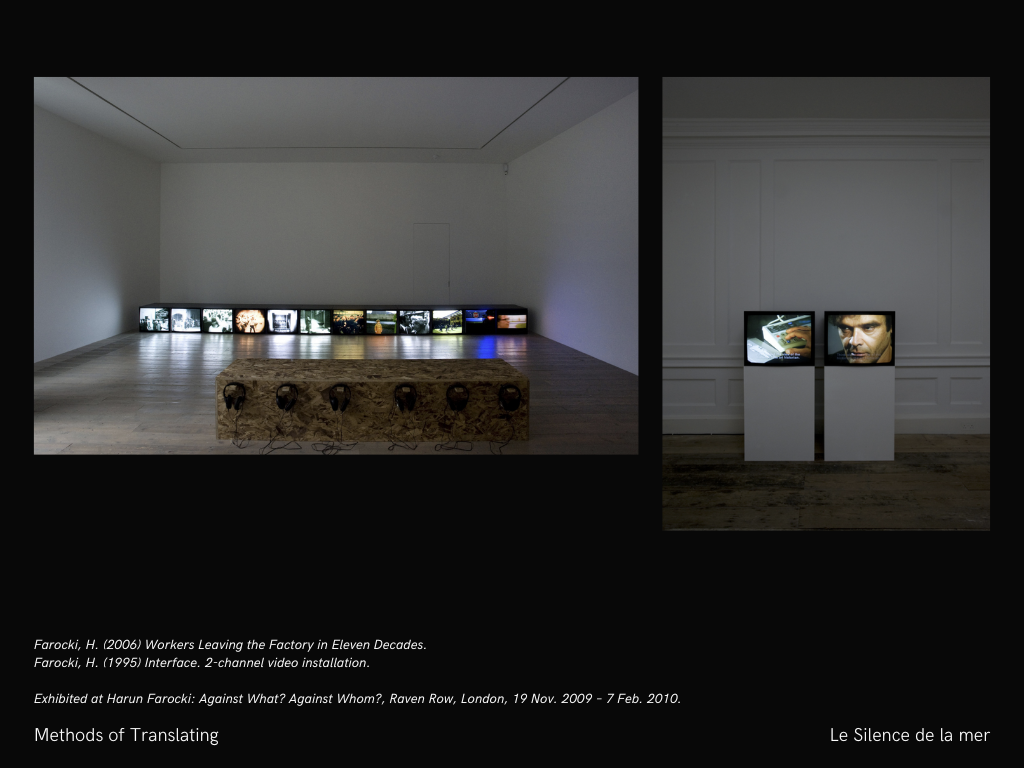
- Farocki, H. (1995) Workers Leaving the Factory [Video]. Germany.
Further development
I proceeded with Paraphrasing for its conceptual potential and engaging process.
A comment from last week noted that while the process and resulting visuals were engaging, the translation of conceptual elements from the film were still unclear. To address this issue, my aim this week focuses music as a language of communication within the film.
As mentioned above, music serves as a key tool for communication and emotional connections throughout the film. However, in response to the feedback, I am reinterpreting music’s role from an expression of friendliness and understanding to an expression of opposition and resistance. Drawing inspiration from Harun Farocki’s multi-channel video installations, I developed a concept involving two juxtaposed video projections:
- One depicting the peaceful life of the French people as if the war had never occurred
- The other showing the German occupation of Paris, illustrating the spread of control and its effects on the city
Each video is accompanied by an original musical composition constructed from sounds and narrations sourced from the film. In the video representing the French people, the music is composed using sounds and narrations from the French characters, which reflects their acts of resistance against the German occupation. The other vice versa. These video can be played individually as separate works, but when they are played simultaneously, the musics intertwines and combine into one. The idea is to employ irony and translate music from what is traditionally a bridge between individuals, to the site of conflict where two opposing messages converge.
Reference
Methodology
To achieve this translation, I:
- Divided the film into two narrative perspectives: French civilians and German occupiers. Each perspective contains, correspondingly, scenes depicting ordinary French life and those containing prominent symbols of the war and the Nazis.
- Extracted the audio from these scenes, isolating narrations/monologues/dialogues (if any) from the background music and environmental sounds.
- Converted each audio elements into MIDI files.
- Construct new melodies by: reordering and layering the MIDI files; adding instrumental effects and manipulating the volumes of existing notes (and deleting notes that are out of tune/sync, but I try to keep the files as original as possible)
Work In Progress
Version 1.0: For this version, I focused on constructing one melody to serve as the main focus across both tracks to ensure cohesion. As this version primarily used audio from the Pro-German narrative, you may notice that portions of it appear in the final Pro-German channel as well. Due to their jittering patterns, most narrations were used as bass and strings to create depth instead.
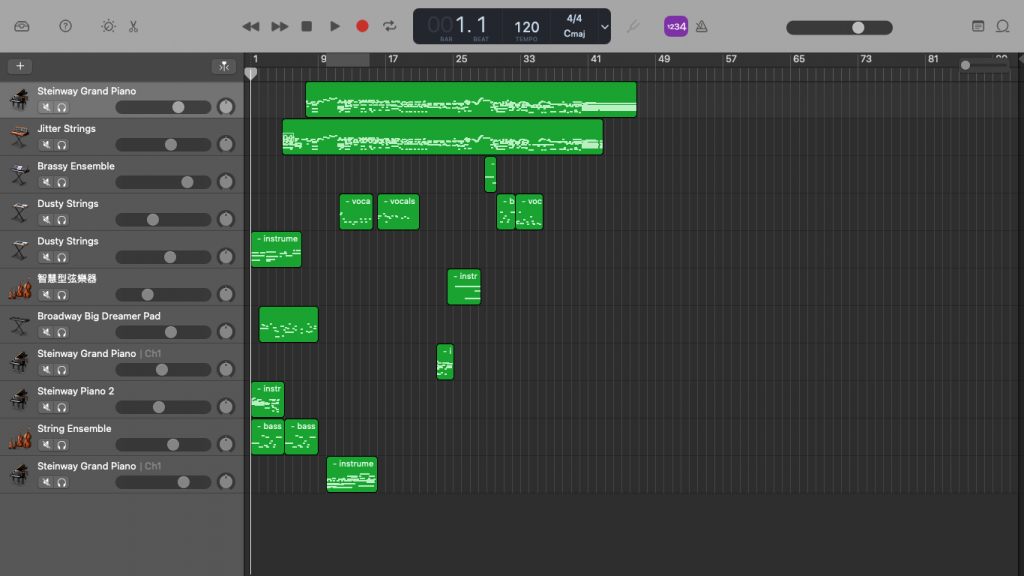
Version 2.0: I introduced audio from the Pro-French narrative on top of the previous version. Compared to the audio extracted from the Pro-German narrative, most Pro-French audio tend to be softer and less abrupt. In response, I attempted to construct an additional melody to complement the existing one. You may notice some obvious, repetitive piano sounds at the start of this version; these were intended to use the Pro-French narrations as a melodic element instead of rhythmic.
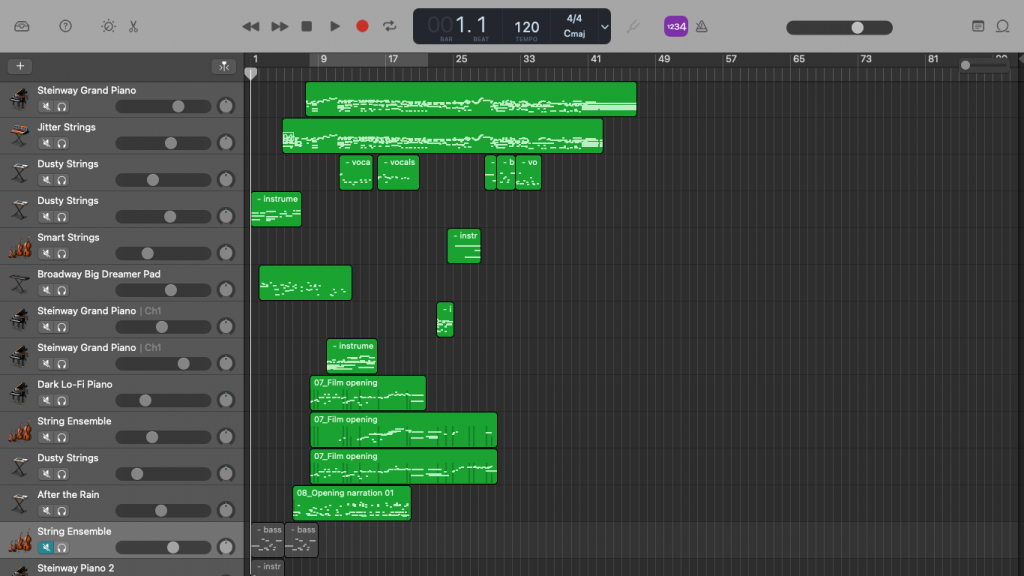
Version 3.0: I experimented further with the instruments to make the repetitive piano notes more expressive, which you may notice as soft bar chimes at the start of the audio. This version also attempted to offset the two melodies, as I had difficulty finding a suitable timing for overlapping them. I was overly conscious of creating two independent melodies and neglected the fact that, while expressive in their own ways, they also needed to interact cohesively. Therefore, as you can see from the structure below, the Pro-German channel track appears almost empty at the start, and vice versa for the Pro-French channel. This was concerning because it meant that much of the Pro-German channel would be silent at the beginning, while the Pro-French channel would be silent at the end, which diverged from the original intention of creating two music tracks that “talk” to each other.
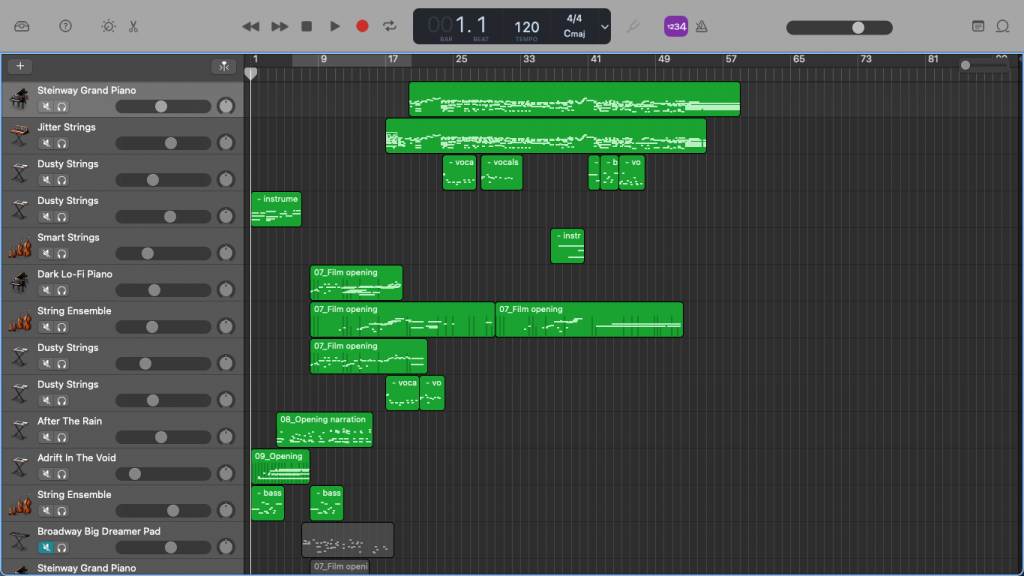
Version 4.0: This version introduced more Pro-French narrative audio to explore potential compositions. In response to the issue mentioned earlier, I attempted to distribute the audio more evenly across the duration so that the two tracks would be balanced throughout the video.
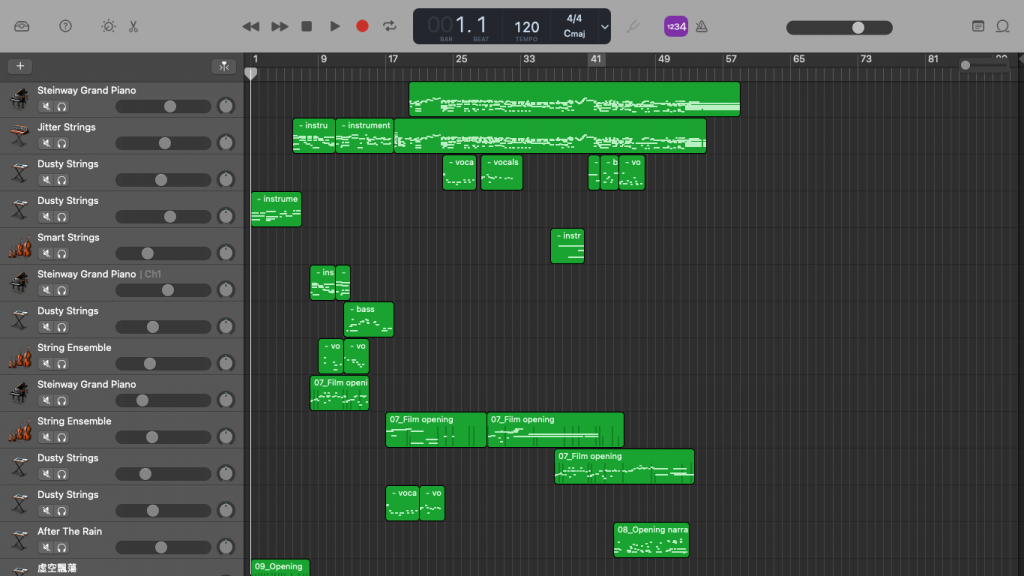
Version 5.0: This version is very close to the final version used in the two-channel video. I divided parts of the previous audio elements into smaller segments and refined certain notes in the Pro-French track to ensure clarity and prevent disruption with the Pro-German track.
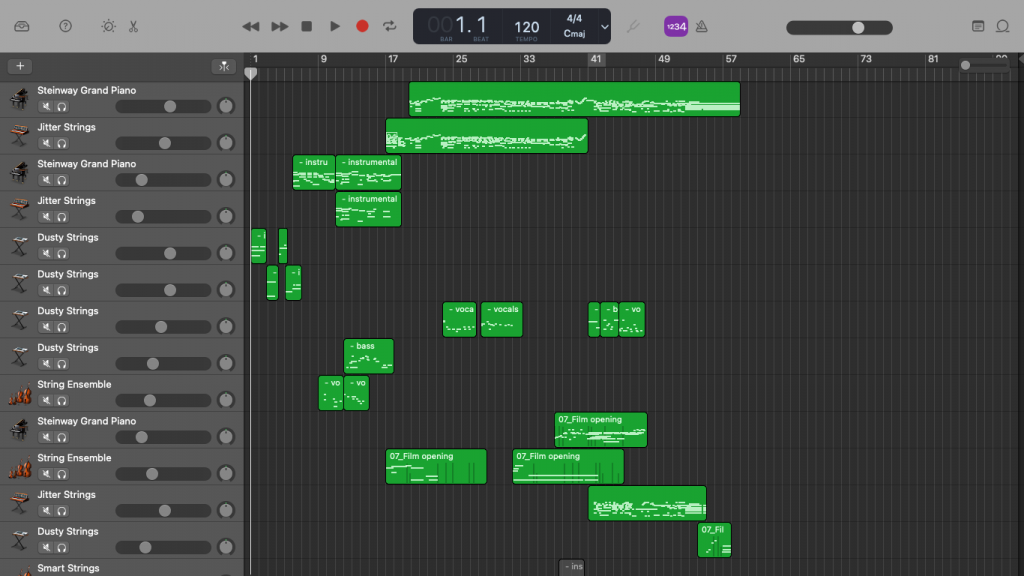
Results
Resulting from the previous experiment are two interdependent musical pieces as shown below (p.1-2:Pro- French narrative; p.3-5: Pro-German narrative). Rather than displaying instruments as separate staffs in the score, I combined all instruments into one staff. In this sense, the notes themselves become symbols of unity — where multiple voices and narratives merge to express one collective message, or one melody.
At the same time, I re-sequenced the collected scenes to produce two videos that enable viewers to perceive the political messages behind the musical tracks. Each track is added to the video with aligning narrative, resulting in a two-channeled video work conceived as a video installation for exhibition settings.
Outcome
The first outcome is a two-channel video, as shown below.
The two-channel video produces a paradoxical harmony: what appears to be a unified piece of work is, in fact, containing and composed from opposing political messages. The synchronisation and juxtaposition of scenes with similar settings uses graphics to establish a shared, observable environment for the two soundtracks to coexist. The overall outcome transforms music from an emotional language of connection (as originally framed in the film) into one that exposes contradictions, while echoing the metaphorical silence in the film’s title, where unspoken resistance and invasion coexist beneath the obvious surface of the images.
The second outcome is a pair of publications.
Special Notes:
- Page 38: On this page, dialogues describing the German officer surround those describing the French niece. This layout was arranged in an attempt to visualise the condition of French people being restrained under German control.
- Page 41: A blue box fills the page, responding to the featuring text that describes a room gradually filling with suffocating gas.
- Page 43: In the last paragraph, the tracking loosens as the dialogue completes, allowing more space for the words to breathe across the page, reflecting the old man’s sense of “being able to breathe again.”
In conclusion, this project reconfigures the focus of the film from a story of personal epiphany to a narrative of patriotism and national devotion.It magnifies the overlooked perspective of the French people, who kept silent throughout the film, and prompts reflection on the flexibility of graphic communication design in supporting, challenging or establishing moral standpoints of familiar histories.
Written Response
Leave a Reply